
Drifting Apart or Redefining Ties? Armenia and Russia in 2026
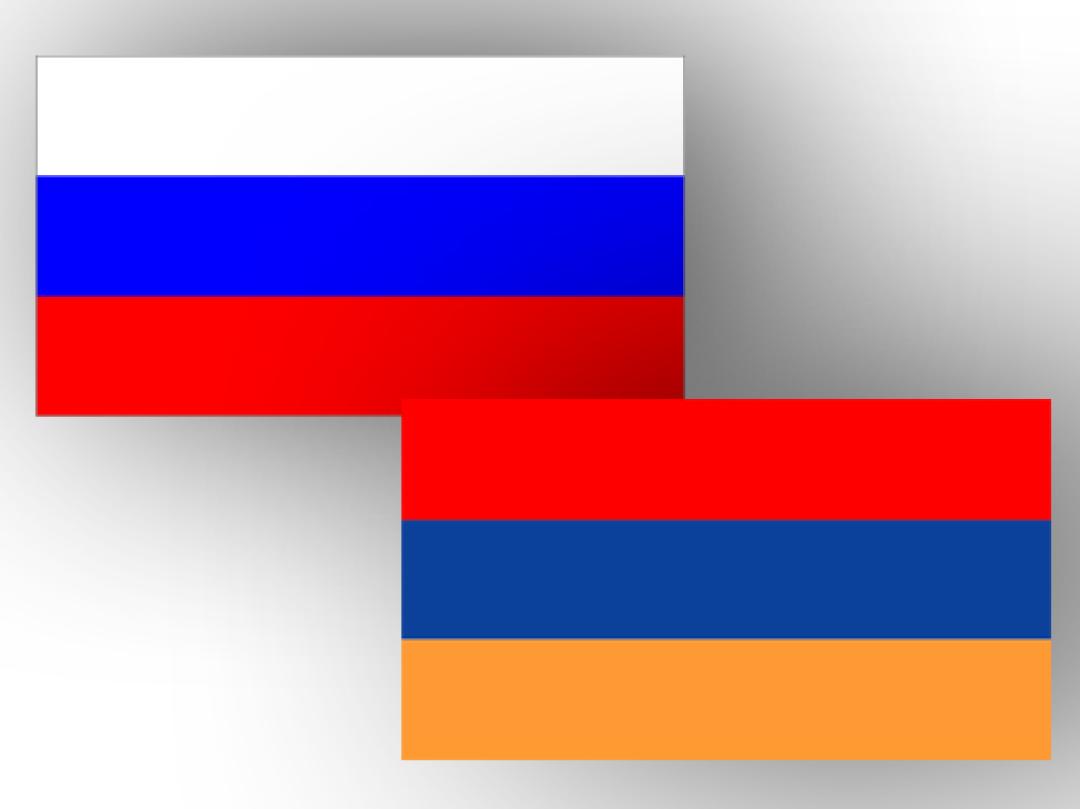
Armenian-Russian relations, once defined by deep historical ties and shared strategic interests, are currently undergoing a period of significant transformation. Armenian Prime Minister Nikol Pashinyan's public acknowledgment that these ties “will no longer be what they were before” signals a redefinition of the bilateral relationship rather than a complete rupture. Moscow, despite recognizing this shift, continues to view Armenia as an ally, with Russia’s ambassador affirming ongoing political dialogue. Yet the reality of diminished Russian influence in the South Caucasus is undeniable. Russia, long the region’s dominant power, is grappling with an overextended military presence in Ukraine and the shifting geopolitical priorities of the post-Soviet space. This, coupled with Armenia's evolving foreign policy, is testing the foundations of their once-unbreakable alliance.
As Armenia approaches its 2026 elections, domestic political dynamics will play a crucial role in shaping the country’s foreign policy. Pro-Russian factions within Armenia’s political spectrum continue to resist the growing pro-Western sentiment, fueling a vibrant national debate on sovereignty, identity, and strategic alignment. These internal discussions will be pivotal in determining whether Armenia’s shift towards the West is a temporary move or the start of a permanent realignment of its foreign policy.
In this period of transformation, Armenia faces a complex geopolitical balancing act. The erosion of Russia’s traditional influence in the South Caucasus is part of a broader tectonic shift in Eurasian geopolitics. As Armenia reevaluates its security, economic, and political partnerships, its ability to navigate this evolving landscape will shape its future role in the region. The 2026 elections will serve as a critical juncture, determining the course of Armenia’s international alliances and its place within the broader contest for influence in the Caucasus.
What position will Armenia adopt toward its external partners—particularly Russia—given the recent years of frozen cooperation within the Collective Security Treaty Organization (CSTO), the withdrawal of Russian border guards from Armenian territory, and other developments? Caucasus Watch sought to explore the forecasts emerging from Armenian expert circles.
Railway Disputes and Geopolitics Loom Over Armenia’s Pre-Election Moves
In a conversation with us, Samvel Meliksetyan, an expert at the “Armenian Council” Analytical Center, said these processes hinge on several factors, including domestic pre-election dynamics and external developments such as the Russia–Ukraine war and ongoing regional conflicts.
“In this regard, if we assume—albeit a rather unlikely scenario—that Russia achieves significant success on the Ukrainian battlefield before the elections, I believe Armenia’s position will remain adaptive, meaning it will depend on the opportunities provided by the external environment. The authorities’ tactics are flexible; however, anti-Russian sentiment is also among the factors they are likely to leverage during the pre-election period, for several objective reasons.
One reason is that after the 2020 war, despite a largely adaptive policy toward Russia, the authorities faced a serious security crisis. Since December 2022, they have gradually shifted approach, diversified foreign relations, and reduced Russian presence—especially after 2024, when Russian peacekeepers withdrew from Nagorno-Karabakh, border areas, Zvartnots Airport, and checkpoints. If this trend continues, it will persist before and after the elections, with Armenia leveraging opportunities from the Ukraine war to deepen ties with partners like the EU and the US,” the expert notes.
Discussing the elections, Meliksetyan says “anti-Russian sentiment”—a term he finds problematic—will likely shape the campaign, with Russia cast as a troublesome partner and figures like Samvel Karapetyan and former President Robert Kocharyan portrayed as pro-Russian or Russia-backed.
Responding to our question on whether Russian interference in Armenia’s upcoming elections is possible—and how credible the government’s warnings about hybrid threats are—expert Samvel Meliksetyan noted that such threats are often politicized, leading to two competing interpretations: either they are dismissed as exaggerated, or any political pressure is automatically framed as a hybrid attack.
He argued that hybrid threats are real and have been evident in past cases, including Ukraine and more recently Moldova and Georgia, where Russia employed political, informational, and strategic tools to influence outcomes. According to Meliksetyan, similar patterns are emerging in Armenia, particularly through Russian media narratives and messaging aimed at shaping public opinion, including among the Armenian diaspora in Russia.
He also pointed to indirect channels of influence, such as religious and informational campaigns, as well as discussions about the potential mobilization of Armenia-based voters from Russia. While the effectiveness of such methods may be limited, he stressed that Moscow increasingly views Armenia within the same strategic framework as Ukraine, Georgia, and Moldova.
At the same time, Meliksetyan warned that Armenia remains vulnerable to such influence, as state institutions and analytical capacities are not yet fully equipped to counter complex hybrid threats. As a result, responses are largely confined to the information sphere, while more advanced countermeasures remain underdeveloped.
Recent reports suggest Armenia is considering replacing Russia with a third-country company to manage its railways. Prime Minister Nikol Pashinyan previously urged Russia to urgently restore key sections, including Yeraskh–Nakhichevan and the route to the Turkish border, raising the issue with President Vladimir Putin. He later said that if Russia cannot complete the work, Armenia could take control or allow a third country with good ties to both sides to assume the concession. Moscow reacted sharply: Russian Security Council Secretary Sergei Shoigu called the plan “ill-conceived” and warned it could collapse the system overnight, while Foreign Ministry spokeswoman Maria Zakharova labeled it “bizarre and unacceptable.”
Could a third-country company replace Russia in managing Armenia’s railways, and what would it mean for the country? Samvel Meliksetyan said the outcome depends on external developments: “If Russia’s position strengthens, Armenia is unlikely to push its demands. I believe Russia initially tried to be constructive, agreeing that some restoration work on the railways should proceed. However, its response has been sharp, both on the railways and the nuclear power plant, reflecting Moscow’s concern about losing influence in Armenia. Such a loss could eventually threaten Russia’s military base, leverage in energy and other sectors, where Armenia remains heavily dependent. At the same time, the ongoing conflict in Ukraine limits Russia’s ability to exert direct pressure, which has so far weakened its position in Armenia rather than strengthened it. Regarding a third-country operator, Armenia’s railways are only profitable if borders remain open, as their value lies in transit. Historically, Russia gained the railway concession in 2008 for political reasons, part of a broader strategy dating back to the post-2004 Georgian revolution to secure strategic transport links. The railways have never been profitable, and corruption within the Russian operator has triggered repeated disputes, audits, and legal challenges since 2010. Armenia could seek to reclaim the concession, but legal and political hurdles remain. Russian efforts to resolve the issue have faced strong pushback, and no immediate solution appears likely. In the long term, this challenge could weaken Armenia’s role as a transit country, especially if borders fully reopen,” Meliksetyan concludes.
Russia Seeks Opposition Influence
In an interview with us, Arnold Bleyan, political commentator, Secretary of Foreign Affairs at the Rally for the Republic Party, and Executive Director of the Armenian Center for Democracy and Security Issues, predicts that Armenia is likely to gradually reduce its dependence on Russia as relations with Azerbaijan and Turkey normalize—especially once a final peace agreement with Azerbaijan is signed and borders, including Turkey’s, are reopened. On Armenia’s future with the CSTO, Bleyan suggested that the country may either formally withdraw or, alternatively, it would not be surprising if the CSTO itself decides to terminate its membership.
Regarding the risk and reality of hybrid warfare during Armenia’s elections, Arnold Bleyan confirmed that Russian influence has already been evident multiple times, including on broadcasts from Russia’s Channel One. He emphasized that Russia sees it as crucial to maintain a presence in Armenia—if not through the government, then at least via the opposition.
“Russia may attempt to shape a new government—or strengthen a broader opposition to pressure the authorities—and if this occurs, one parliamentary faction openly aims to integrate Armenia into the Union State,” Bleyan warns. He also cautions that disinformation campaigns, fake accounts, hybrid attacks, and potential cyberattack on state infrastructure remain risks.
In this context, Bleyan emphasized that Armenia has officially requested the European Union to send a rapid response team, noting that the EU already has experience in several countries, with its most recent successful mission being in Moldova. “Armenian officials are also in contact with their Moldovan counterparts, working on a knowledge-sharing basis. I believe this is very important, as it allows us to draw on Moldova’s experience to better defend ourselves against such attacks. We see that the closer the elections get, the more intense these attacks become. Recently, in central Yerevan, citizens were handed copies of Komsomolskaya Pravda, which illogically claimed that Armenia is collapsing,” Bleyan said.
On the authorities’ proposal to replace Russian-operated railways with a third-country operator, Bleyan said the plan has both political and economic motives. “Potential partners, like Kazakhstan or Qatar, would need to be acceptable to both Armenia and Russia. The main benefit is enabling the Peace Crossroads project, as Western and regional investors avoid infrastructure under Russian control. Armenia also has legal grounds: after the 2018 revolution, a criminal case was opened over abuses in the South Caucasus Railway. When Russia assumed management in 2008, it promised around $100 million in investments that were never delivered. Repeated requests to restore key routes also went unheeded.”
Bleyan warned that Russia has already rejected such a replacement. He dismissed claims that removing Russia would collapse the railway as empty threats. “The system is already in poor condition. Only a few routes operate—Yerevan–Tbilisi, Yerevan–Gyumri, Yerevan–Sevan—mostly on long-degraded tracks. He added that Russian railways themselves face severe financial problems, with billions in debt and asset sales to avoid bankruptcy. “Under these conditions, Armenia cannot rely on them to fully reopen transit or achieve the Peace Crossroads goals, including the TRIPP project, which envisions a railway independent of Russia”.
On this issue, Bleyan noted that some political forces in Armenia advocate involving Russia and China in the TRIPP project, which he considers entirely illogical. “The project was designed precisely to reduce Russian and Chinese influence over these logistics’ infrastructures. This isn’t just about Armenia and Azerbaijan—it concerns Central Asia, Europe, and broader geopolitical engagement. It’s not even about Donald Trump, as the initiative predates his administration and aims to operationalize the Middle Corridor.” Bleyan summed up his analysis with sarcasm: “If we want TRIPP to fail, then we can loudly call for Russian and Chinese involvement.”
Armenia Gradually Reduces Russian Presence
In an interview with Caucasus Watch, Grigor Balasanyan, Associate Professor of International Relations and Diplomacy at Yerevan State University, said he does not expect Armenia’s authorities to take any major new steps against Russia. However, he noted that some symbolic gestures will likely be directed at Moscow to buy time and prevent the opposition from claiming during the elections that the government is pursuing a fully anti-Russian policy.
“In reality, Armenia’s ties with Russia are largely situational. The government acts to ease tensions when Moscow reacts abruptly, but overall, authorities are pursuing a policy that gradually pushes Russia out across education, politics, the economy, and defense. Since 2018, substantive progress in Armenian-Russian relations have been minimal. While Armenia profited economically as a transit hub for Russian capital in 2023–2024, political decisions consistently favor the EU over Russia, a reality evident on the ground,” the analyst said.
Unlike our speakers above, who identified risks of hybrid warfare ahead of the elections, Grigor Balasanyan considers this false agenda introduced into Armenia’s political landscape.
“There is no hybrid warfare for a simple reason—Russia is not conducting hybrid wars anywhere. Hybrid warfare is being carried out by the European Union. The EU provides $15 million and deploys a rapid response team to monitor elections in Armenia, as it has done in Moldova—so isn’t this interference in elections?” Balasanyan counters.
Balasanyan also ruled out the possibility of transferring railway management to a third country at the state level, arguing that Russia would not relinquish its concession rights to any external actor and that such discussions are not serious.
“Negotiations were already underway between the relevant Armenian and Russian bodies on restoring certain railway sections. However, I believe this comes at a price—namely, that Russia would need to be involved in the TRIPP project and, in some form, participate in the process of reopening regional transport routes.”
Balasanyan also drew attention to the fact that Russian Deputy Prime Minister Alexey Overchuk was recently in Baku, where he met with Ilham Aliyev, with the reopening of regional communications topping the agenda. He argued that if routes through Azerbaijan are expected to link to Russia, Russian—rather than Armenian—railways would be involved, making it unlikely that Moscow would build the lines, hand them over to Armenia, and then step out of the process.
“Either Russia will take part in the TRIPP project, and the railway will be restored, or it will simply refrain from reconstruction and wait until 2036, observing attempts to transfer its concession to another country. This would have serious legal consequences, amounting to a contract breach. Unlike cases involving private companies, this is a state-level concession, making the process far more complex—if not unrealistic—and likely to produce negative outcomes. Can anyone guarantee that Moscow would not resort to pressure or sanctions, such as imposing tariffs on Armenian goods? If access to the Russian market is restricted before alternatives in the EU are secured, where will Armenian exports go, and what will consumers do? This is the key question. One can theorize, but realpolitik is far harsher and demands greater caution and responsibility,” Balasanyan warns.
“Hybrid Attacks" or Foreign Interference?
Our next interlocutor, political scientist Benyamin Matevosyan, believes that Armenia’s position in its foreign relations will largely depend on the results of the parliamentary elections scheduled for June 7, 2026.
“If the current authorities are re-elected, they will, in fundamental terms, return to their original positions. Prior to 2008, Prime Minister Nikol Pashinyan repeatedly expressed clear views in both his public speeches and writings on Russia, Turkey, Nagorno-Karabakh, and the so-called Meghri corridor. I would suggest revisiting his early-2000s article ‘We and Our Interests,’ in which he argued that the main beneficiaries of transport corridors through Armenia would be Turkey and the United States, while Russia and China opposed them. He also raised the question of why Armenians should be ‘more Russian than the Russians’ or ‘more Chinese than the Chinese,’” Matevosyan noted.
Benyamin Matevosyan is confident that if Prime Minister Nikol Pashinyan is re-elected, the Russian factor in the South Caucasus will be reduced to zero, while no geopolitical vacuum will emerge. “In that case, Turkey will further strengthen its position in the region, with all the resulting consequences for Armenia. Why not the European Union? Because Pashinyan himself has said that Armenia’s European future depends on Georgia’s. And even Armenia’s authorities acknowledge that our Georgian partners currently face difficulties in their relations with European counterparts,” he said.
Meanwhile, Matevosyan argues that if alternative opposition forces come to power, Armenia would pursue a more balanced foreign policy, avoiding involvement in the clash of external interests and the pursuit of short-term geopolitical gains.
Regarding the risk of hybrid warfare, Benyamin Matevosyan shares the view that, so far, European involvement is more visible in the context of Armenia’s upcoming elections. He referenced Kaja Kallas’s announcement about sending a rapid response team to Armenia to counter hybrid attacks. According to Matevosyan, Europe does not even hide that these “hybrid attacks” primarily refer to Russia’s information operations and influence in Armenia.
“We have effectively made a foreign actor part of Armenia’s domestic politics—but it is not Russia, it is the European Union” the analyst alludes.
Regarding the revision of railway management, Benjamin Matevosyan also criticizes the actions of the current authorities. In his view, developments in recent years demonstrate that their decisions are driven not by economic or security considerations, but by political priorities—specifically, an apparent intention to eliminate both Russian state capital and state presence in Armenia.
To justify this course of action, the authorities claim that external partners have indicated Armenia is not an attractive prospect if its railways remain under Russian control. However, according to the political analyst, this argument represents a case of political déjà vu.
“Recall Nikol Pashinyan’s remarks in March–April 2022 at the National Assembly, where he said international partners were urging Armenia to lower expectations on Artsakh’s status in exchange for broader support. He did not name those partners or explain their motives, but subsequent developments suggest the main beneficiaries were Turkey and Azerbaijan. Can we now conclude that a similar pattern is unfolding regarding the railways—that Turkey and Azerbaijan expect the removal of Russian state capital from Armenia, and that the authorities have devised a political alibi to carry this out?”, Matevosyan wraps up his analysis with a rhetorical question.
Contributed by Anna Vardanyan, an Armenian political journalist and researcher with over 18 years’ experience in defence policy, international relations, and security in Eastern Europe and the Caucasus, has worked for Armenian media and held advisory roles in the National Assembly of Armenia.
Insights,
Politics,
Armenia |
EU, Russia, Nikol Pashinyan, CSTO, Armenia-Russia Relations, Grigor Balasanyan, TRIPP, Anna Vardanyan, Samvel Meliksetyan, Arnold Bleyan, Benyamin Matevosyan